KODAMA KANOH P100 Classical Concert Guitar
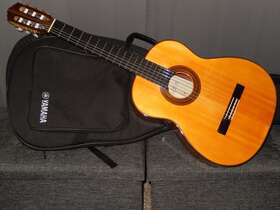
( Brand: Kodama Kanoh ), ( Manufacturer Part Number: P100 ), ( Custom Bundle: No ), ( String Configuration: 6 String ), ( Country/region Of Manufacture: Japan ), ( Body Type: Standard ), ( Type: Classical Guitar )
Review KODAMA KANOH Hand Made In By World Class Classical Grand Concert Guitar
The Kodama Kanoh P100 1966 Classical Concert Guitar is a rare and exquisite piece of craftsmanship that hails from the golden era of guitar manufacturing in Japan. This guitar, with its rich history and exceptional quality, has been meticulously preserved to offer a unique and unparalleled playing experience.
The Kodama Kanoh P100 features a solid Spanish cedar top, known for its warm and resonant tone. The guitar's back and sides are made from Indian rosewood, a choice of wood that is renowned for its richness and depth of sound. The combination of these two woods results in a sound that is both rich and complex, with a balanced and well-rounded tone that is perfect for classical music.
The P100's neck is made from Spanish cedar as well, with a delicate and slender profile that is comfortable to play and allows for precise intonation. The guitar's fretboard is made from ebony, a hard and dense wood that provides a smooth and responsive playing surface. The P100's frets are hand-dressed, ensuring a perfect action and smooth playability.
The Kodama Kanoh P100 1966 Classical Concert Guitar is finished in a natural lacquer, which allows the wood's grain to shine through and adds to the guitar's overall aesthetic appeal. The guitar's tuners are high-quality Gotoh machines, ensuring reliable tuning and smooth action.
In conclusion, the Kodama Kanoh P100 1966 Classical Concert Guitar is a rare and exceptional instrument that offers a unique playing experience. With its rich, warm tone, comfortable playability, and classic Japanese craftsmanship, this guitar is a must-have for any serious classical guitarist or collector.
Pros of buying Kodama Kanoh P100 (1966 Classical Concert Guitar):1. Authenticity and Rarity: The Kodama Kanoh P100 is a vintage instrument, manufactured in 1966. As such, it has a unique character and is a rarity in the market.
2. Craftsmanship: Kodama Kanoh is a renowned Japanese luthier, known for his attention to detail and excellent craftsmanship. The P100 is expected to have a superior build quality and sound.
3. Tone and Playability: Vintage guitars, like the P100, often develop a unique and rich tone over time. The guitar's aged wood may contribute to a warmer, more complex sound, which some players prefer to the brightness of newer instruments.
4. Investment Potential: Vintage guitars can appreciate in value, and the Kodama Kanoh P100, being a rare and high-quality instrument, may be an investment worth considering.
Cons of buying Kodama Kanoh P100 (1966 Classical Concert Guitar):1. Maintenance and Restoration: Vintage guitars may require more maintenance and restoration than newer instruments. This could mean regular checks and tune-ups, as well as potential repairs to address any wear and tear.
2. Cost: The Kodama Kanoh P100 is likely to be more expensive than a new guitar, due to its rarity and craftsmanship. This may make it an unattainable purchase for some guitarists.
3. Limited Availability: Due to its age and rarity, finding a Kodama Kanoh P100 in good condition can be challenging. Potential buyers may need to search extensively or settle for a less-than-perfect instrument.
Conclusion and Recommendation:The Kodama Kanoh P100 (1966 Classical Concert Guitar) is a unique and high-quality instrument that offers potential advantages in tone, craftsmanship, and investment potential. However, its rarity, potential need for maintenance, and higher cost may make it a less practical choice for some guitarists.
If you are a collector, an experienced player seeking a unique sound, or have a significant budget for a guitar, the Kodama Kanoh P100 could be an excellent investment. However, if you are a beginner, a casual player, or have a more limited budget, you may want to consider more affordable, modern options that offer excellent playability and sound quality. It is always advisable to try out the instrument before purchasing to ensure it meets your specific needs and preferences.
Details:
The only imperfections I have found are light attrition on very tip of the back of the head stock, attrition's binding finish near butt area and crack sin running over sections plate. If you'd like to check my modest playing skills on the links below. Its body shines like new and its free from any scratches or dents.
Some Japanese guitar makers introduced model names instead of model numbers. The original nickel-plated tuners last picture were used in Japan inlaying mid 1960s. When you inspect it, will realize that this guitar is built toast forever. Back sides: Solid Brazilian Rosewood/urethane.
Others were still using model numbers with the addition of letter sand/or other symbols. All vintage guitars made with Brazilian Rosewood are especially precious, including those straight grain varieties and those non-solid b/s. Its body feels heavier than average and certainly sturdier. Yet I am 100% sure that it Esther original label.
This truly magnificent instrument offers immense volume and super response combined with moderately bright romantic tonality, deep cello-like basses, strong piano-like round trebles, with high level of note clarity separation very extended sustain. The fret position dots visible on the side of fingerboard seem to be original as well. Fingerboard: Ebony. Kodama Smash Kano classical guitar made in 1966.
I don't know why the label is installed on an angle not in perfect horizontal position. They are running right over the binding and hard to spot irregular light. Real Value of Japanese Vintage Guitars. These cracks are not associated with any cracks in the wood below nor separation between the parts.
He became independent in 1966, making various types of musical instruments such as mandolins, lutes, 19th century guitars, multi-string guitars, hulas, and guitar NS. Strings:Suarez Crustal Normal Tension. They don't require any repairs unless you chose to do so for personal reasons. Its straight neck, fingerboard and frets don't show signs of use.
Neck: Honduras Mahogany. The same applies to another Japanese maker/brand. Because response and tonal properties of Spruce soundboards are improving over time,long seasoned Spruces far more precious than long Cedars. I am not sure how it compares with currently made Kano's top model, but it certainly deserves the title of Grand Concert instrument.
Because these tuners are very hard to turn, they were replaced by modern era Goth. He was also a domestic pioneer in the production of short scale guitars. Theological way to estimate the true class of any given Japanese made instrument ISO compare its price with average annual salary wage workers in Japanese private sectors.
specifications classicaguita:
- brand: Kodama Kanoh
- mpn: P100
- custom bundle: No
- string configuration: 6 String
- country/region of manufacture: Japan
- body type: Standard
- type: Classical Guitar
shipping classicaguita:
- service: USPS Ground Advantage, USPS Priority Mail
- transit: 7-12 Days
- carrier: USPS
- class: Standard, Expedited
- cost: $147.05
- type: Calculated
ratings:
- Quick response and fast payment. Perfect! THANKS!! 04-01-23
- Hope to deal with you again. Thank you. 04-01-23
- Outstanding seller goes above and beyond. 04-01-23
- Arrived quickly and safely. 07-01-23
- I would recommend buying from victor to anyone I didn have to wait too long for my guitar to be ship the delivery was prompt and pleasant.also never had the most comfortable guitar to play with my church choir its tone response and clarity with the voicing were amazing. Thank you Victor Sincerely, Hermes Gerena p.s. looking forward to buying from you again 04-01-23
general classicaguita:
- condition: Used
- Musical Instruments Gear > Guitars Basses > Classical Guitars
seller classicaguita:
- # feedbacks: 686
- rating: 100.0%
- city: Alpharetta, Georgia
returns classicaguita:
- policy: No Returns
payments classicaguita:
- credit card: American-express
- wallet: Google-pay
offer classicaguita:
- sold: 0
- best offers: True
- quantity: 1
- availability: In Stock
- options: Ship-to-home
- started: October 4, 2023