YUKINOBU CHAI NO35 Scale Classical Concert Guitar In NO30
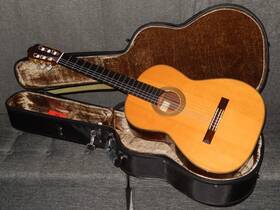
( Brand: Yukinobu Chai ), ( Manufacturer Part Number: NO35 ), ( String Configuration: 6 String ), ( Model Year: 2003 ), ( Country/region Of Manufacture: Japan ), ( Performance Level: Professional ), ( Body Type: Classical ), ( Type: Classical Guitar )
Review YUKINOBU CHAI Made In Superb Short Scale Classical Concert Guitar
The Yukinobu Chai No.35 1996 is a truly remarkable 1/30 scale classical concert guitar that pays homage to the rich legacy of traditional Spanish guitar-making. This exquisite miniature instrument, crafted by the renowned Japanese luthier, Yukinobu Chai, is a testament to his exceptional skills and dedication to the art of guitar-making.
The body of this guitar is crafted from high-quality European spruce for the top and African mahogany for the back and sides. The choice of these materials allows for a balanced tone that is both bright and rich, with a warm and resonant sound. The intricate rosette, inlaid with mother-of-pearl, adds a stunning visual element to the guitar's exterior, while the elegantly curved back and beautifully shaped sides showcase the meticulous craftsmanship that went into its construction.
The guitar features a traditional Spanish-style neck, made from mahogany, and a rosewood fretboard with 24 frets. The neck is set into the body with a traditional dovetail joint, ensuring a solid and stable connection. The guitar's scale length is 650mm, and the nut width is 48mm, making it comfortable to play for both beginners and experienced players.
The Yukinobu Chai No.35 1996 also boasts a set of high-quality machine heads and bridge, ensuring smooth tuning and optimal transfer of vibrations from the strings to the body. The guitar comes with a hard-shell case, providing excellent protection during transportation and storage.
In summary, the Yukinobu Chai No.35 1996 is a remarkable 1/30 scale classical concert guitar that offers a perfect blend of traditional craftsmanship, high-quality materials, and exceptional sound. It is an ideal choice for guitar enthusiasts who appreciate the beauty and artistry of traditional Spanish guitar-making, and who are looking for a unique and valuable addition to their collection.
Pros of buying Yukinobu Chai No.35 1996 No.30 scale classical guitar:1. High-quality materials: The guitar is made of high-quality materials such as cedar top, Indian rosewood back and sides, and ebony fingerboard, which contribute to its rich sound and durability.
2. Unique design: The guitar has a unique and elegant design with its flamed maple binding and rosette, which make it a standout piece in any collection.
3. Limited production: As only a limited number of these guitars were produced, owning one can be considered a rare and valuable possession.
4. Good investment: Given its high-quality materials and limited production, the guitar may increase in value over time, making it a good investment for collectors and musicians alike.
Cons of buying Yukinobu Chai No.35 1996 No.30 scale classical guitar:1. High price: The guitar is priced higher than many other classical guitars due to its limited production and high-quality materials, which may be a prohibitive factor for some potential buyers.
2. Size: The guitar is a 30-scale classical guitar, which may be too small for some players, especially those used to playing larger guitars.
3. Availability: Given its limited production, finding a Yukinobu Chai No.35 1996 No.30 scale classical guitar for sale may be difficult, and when available, it may come at a premium price.
Conclusion:The Yukinobu Chai No.35 1996 No.30 scale classical guitar is a high-quality instrument with a unique design and limited production, making it a valuable possession for collectors and musicians alike. However, its high price, small size, and limited availability may make it an unattainable option for some potential buyers. If you are a serious collector or musician and have the means to invest in such a guitar, it can be a great addition to your collection or a valuable tool for your musical journey.
Recommendation:If you are interested in purchasing a Yukinobu Chai No.35 1996 No.30 scale classical guitar, I would recommend researching the guitar and its history to ensure that you are making an informed decision. Additionally, you may want to consider trying out the guitar before purchasing to ensure that it fits your playing style and meets your expectations. Finally, I would recommend checking with reputable dealers or collectors to see if they have any Yukinobu Chai No.35 1996 No.30 scale classical guitars available for sale.
Details:
This guitar was certainly made based on old Spanish blueprints with simplified Ramirez bracing. Introduction from Chai Guitar Craft Facebook page. For Guitars, Of course, he never made it before. He just learned all from book and real violins.
Its top bears several very light dents embedded within the finish. Some Japanese guitar makers introduced model names instead of model numbers. The same applies to another Japanese maker/brand. There are also few tiny cracks in the finished both ends of that strip.
Because response and tonal properties of Spruce soundboards are improving over time,long seasoned Spruces far more precious than long Cedars. Yukinobu Chai N030 1996. However, it mostly is Yukinobu own creation, and begets all the credits for its great sound. This guitar was made in 1996 by Master Luther Yukinobu Chai being one of his high-end model's that era, priced 300000 yen.
This guitar remains in very good for its age overall condition but comes with minor multiple cosmetic flaws. It sometimes was figured BR or other rosewood from South Central America but quite often it a straight grain. He was interested in making the violin when he a student.
If you'd like to check my modest playing skills on the links below. It made Chai Guitar sound tone. All vintage guitars made with Brazilian Rosewood are especially precious, including those straight grain varieties and those non-solid b/s. 640mm scale 51mm nut.
In that respect Yukinobu had business philosophy like that represented by , Kazoo Yuri or brothers Hiroshima and Moisture Tamra. Specifications. They are visible only from certain angles and hard to show in the pictures. In 1996 great majority of Japanese 300 yen guitars were made with either Brazilian Rosewood or other Latin America Rosewoods b/s Fishhook Ticketmaster 30, Yamaha GC30, Yuk Naked No30, Yogi Mazurka M300 etc.
There are few dents anther back of the neck. He has transferred some constructions from Piano. Neck: Mahogany. Only because of these issues guitar is priced at such low level.
Naturally I started to help him. It leaves the edge of one plate slightly exposed. Now,I'm doing his work and trying to establish the Chai Guitar Brand worldwide.Chai Craft Yorkshire President. If they were reaching the wood they would be visible in pictures.
It doesn require any repair unless you chose so for other reasons. Otis not very difficult to find out what are current prices of such guitars made by worlds leading Luther's. After selling several of his guitars I know that truly experienced guitarists looking for a special instrument are not bothered by these cosmetic imperfections either. He passed away several years ago.
Others were still using model numbers with addition of letters and/brother symbols. This guitar offers great volume and response, combined with sweet lyrical tonality,with deep rich cello like basses, strong sweet, colorful trebles, all notes overtones, note clarity separation, all magnified by sustain. Most likely the major reason for that were very moderate prices his wonderful instruments. Several hundred guitars I have sold in the past are presented at Facebook /Victors.Guitar.Library.
He was always trying to reach his aimed tone Sound that spread richly. There are few patches of discoloration within the finish on sides. There are several light abrasions along the bindings.
There is also cluster of very small cracks/scratches near the lower right edge the soundboard. Yukinobu most famous pupils are Schizo Boyish, Tats Sake Ishim and Kenosha Mats. Fingerboard: Ebony. Theological way to estimate the true class of any given Japanese made instrument ISO compare its price with average annual salary wage workers in Japanese private sectors.
Since then, he added many strings instruments. At the bottom of the guitar, there is crack in finish at seam that connects side plates. Aim totally not bothered by discolorations of finishes on his guitars from theatre. There is also one few inches long surface crack within the finish of top.
Despite all these imperfections guitar is fully functional, while its straight neck,fingerboard and frets remain in very good condition. I always look at his works beside him. Real Value of Japanese Vintage Guitars. This was influenced by famous movie JX interdicts My father never get a lesson from other violin builder.
part #: no35 prices
- $1520.00-$3500.00
specifications classicaguita:
- brand: Yukinobu Chai
- mpn: No35
- string configuration: 6 String
- model year: 2003
- country/region of manufacture: Japan
- performance level: Professional
- body type: Classical
- type: Classical Guitar
seller classicaguita:
- city: Alpharetta, Georgia
- # reviews: 695
- rating: 100.0%
offer classicaguita:
- options: Ship-to-home
- sold: 0
- quantity: 1
- started: May 14, 2024
- availability: In Stock
general classicaguita:
- condition: Used
- Musical Instruments Gear > Guitars Basses > Classical Guitars
returns classicaguita:
- policy: No Returns
payments classicaguita:
- credit card: American-express
- wallet: Paypal
shipping classicaguita:
- transit: 6-10 Days
- type: Calculated
- cost: $212.85
- carrier: USPS
- service: USPS Priority Mail, USPS Priority Mail Express
- class: Expedited
Yukinobu Chai NO35 Is Similar To:
- Yukinobu Chai Np-30s Classical Guitar 1984 Solid Wood Japan Niibori Mij (45.8% similar) Nebr guitar medallion was removed from head stock, leaving behind a stud, but is included and can be regaled if desired. A few nicks and scratches throughout, but overall pretty clean. Really nice maple bindings and tight straight grain rosewood on the back plate. Yukinobu Chai NP-30S classical ...(October 22nd, 2024)