RYOJI MATSUOKA MH80 David Rubio Classical Concert Guitar
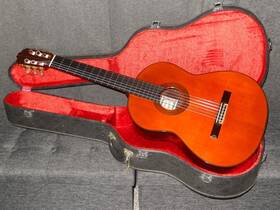
( Brand: Ryoji Matsuoka ), ( Manufacturer Part Number: MH80 ), ( Type: Classical Guitar ), ( Country/region Of Manufacture: Japan )
Review RYOJI MATSUOKA The Authentic David Rubio Model Classical Concert Guitar
The Ryoji Matsuoka MH80 David Rubio 1976 Classical Concert Guitar is a masterpiece of craftsmanship and sound, a testament to the art of luthiery and the passion of its creators. This guitar, a collaboration between Ryoji Matsuoka and David Rubio, is a limited edition model that celebrates the rich history of classical guitar making.
The MH80 is crafted from the finest materials, including a solid Spanish cedar top and Indian rosewood back and sides. The cedar top is known for its warm, rich tone, while the rosewood back and sides provide a strong, resonant foundation. The guitar's neck is made of Spanish cedar, with an ebony fingerboard that is smooth and comfortable to play.
The guitar's body is finished in a beautiful, hand-rubbed Spanish polish, which brings out the natural beauty of the wood and gives the instrument a classic, timeless look. The MH80 also features a high-quality, hand-carved Spanish-style fan bracing, which helps to produce a balanced, powerful sound.
The Ryoji Matsuoka MH80 David Rubio 1976 Classical Concert Guitar is a true work of art, both in terms of its sound and its appearance. Its rich, full tone is perfect for classical music, while its comfortable playability makes it a joy to play. Whether you are a professional musician or a dedicated hobbyist, this guitar is sure to become a cherished part of your collection.
In conclusion, the Ryoji Matsuoka MH80 David Rubio 1976 Classical Concert Guitar is a rare and valuable instrument, handcrafted by master luthiers and designed for the discerning classical guitarist. Its beautiful sound, comfortable playability, and timeless design make it an investment in both music and art.
Pros of buying a Ryoji Matsuoka MH80 David Rubio 1976 Classical Concert Guitar:1. Excellent craftsmanship: The guitar is handcrafted by Ryoji Matsuoka, a renowned luthier, and David Rubio, a highly respected guitar restorer. This ensures high-quality construction and attention to detail.
2. Vintage appeal: The 1976 model has a classic, timeless look that will appeal to collectors and musicians who appreciate vintage instruments.
3. Rich tone: The Spanish cedar top and Indian rosewood back and sides are known for producing a warm, rich sound.
4. Playability: The guitar features a comfortable neck profile and well-set-up action, making it easy to play and produce beautiful music.
5. Investment potential: As a limited edition, handcrafted instrument, the MH80 has the potential to increase in value over time.
Cons of buying a Ryoji Matsuoka MH80 David Rubio 1976 Classical Concert Guitar:1. Price: Due to its high-quality craftsmanship and limited availability, the guitar comes at a premium price, which may be out of reach for some musicians.
2. Maintenance: Vintage instruments require regular maintenance to keep them in good condition. This includes regular cleaning, humidity control, and occasional repairs.
3. Availability: As a limited edition guitar, finding one for sale may be challenging, and competition among buyers could drive up the price.
Conclusion:The Ryoji Matsuoka MH80 David Rubio 1976 Classical Concert Guitar is a high-quality, handcrafted instrument with a rich tone and vintage appeal. While its premium price and maintenance requirements may be challenges, the potential investment value and playability make it an attractive option for serious classical guitarists and collectors.
Recommendation:If you're in the market for a high-end classical guitar and appreciate vintage instruments, the Ryoji Matsuoka MH80 David Rubio 1976 Classical Concert Guitar is certainly worth considering. However, it's essential to weigh the pros and cons and ensure that the investment aligns with your budget and needs as a musician. Ultimately, only you can determine if this guitar is the right choice for you.
Details:
The guitar you are looking at is the second one. The original owner of this guitar will not be able answer this question because he no longer worries about any Earthly Matters. It leaves the edge of one plate slightly exposed. While finish cloudiness it is very common on Matsuoka guitars from that era, this guitar doesn have.
Fingerboard:Ebony. Thinly serious damage is crack in the finish at seam that connects side plates bottom of guitar. All other model's were all solid wood guitars. The bases are deep yet relatively clean.
I have personally seen tens of thousands his guitar sand found only one from 1964 with original signature on the label. However, there is no movement because both sides are still held in place by block and Cerf wood strips on the inside. It certainly was one of his first ever made Jose David Rubio copies .While all regular line MR model's sold since 1978 had Spruce tops, this guitar has Cedar top and different finish looks feels buttery like French Polish. Smoother relevant info.
These guitars have better quality spruce tops and were made in several versions. Ryoji Matsuoka MR model 1976. On the other end of spectrum there were also all solid versions with Solid Indian rosewood or solid Jacaranda back and sides, one double Ebony reinforcement in neck. Individual notes are clear and well separated, all magnified by very extended sustain.
Some Japanese guitar makers introduced model names instead of model numbers. He had another Ryoji Matsuoka guitar with a similar stain on the label. The same applies to another Japanese maker/brand. The Nagoya/Aitch/Kano area Kano is the prefecture next to Ache one of Japans major musical instrument making centers.
I don't think that there is a need for any immediate repair, but you should be prepared tin your budget calculations. Real Value of Japanese Vintage Guitars. The overall condition of this guitar can be described as very good for its age .Although there are just a few minor imperfections visible on back several very light rubbing marks the looks like it has been played little.The excellent soundboard, fingerboard and frets suggest the same. Was managed by Ryoji son and also great Luther .
It was Matsuoka 1977 copy of Herman Hawser guitar, likely predecessor the soon released MH line. The guitar offers impressive volume, great response and depth combined with warm, very sweet, lyrical rich tonality level of transparency. If you'd like to check my modest playing skills on the links below. Original Goth tuning machines work fine.
Strings:Airdrop Artie Low Tension. Some of them, less expensive versions, were made with laminated Indian Rosewood or Jacaranda backhand sides, ebony fingerboards and plain neck. There are also few tiny cracks in the finish at both ends of that center strip. Top:Very Fine Solid Cedar/Rubio bracing/very light coat of Cashew varnish or shellac.
Theological way to estimate the true class of any given Japanese made instrument ISO compare its price with average annual salary wage workers in Japanese private sectors. Others were still using model numbers with addition of letters and/brother symbols. All vintage guitars made with Brazilian Rosewood are especially precious, including those straight grain varieties and those non-solid b/s. All of them were made with solid Spruce tops.
Most likely each guitar was sold with attached precise specification. Matsuoka also made some model's Franz, including a few steel string flattop and arch top. Major guitar and violin makers include Matsuoka Industrial,Suzuki, Bukhara, Sadat Yuri, Kazoo Yuri Kano, Damion, Bamako,Inez/Hashing, Ryoji Matsuoka. Neck:Mahogany.
Because response and tonal properties of Spruce soundboards are improving over time,long seasoned Spruces far more precious than long Cedars. Back Sides: Solid Indian Rosewood/ very light coat of Cashew varnish. All these Matsuoka guitars were greatly under priced if compared with instruments made by most prominent Japanese Luther's of that era. Several hundred guitars I have sold in the past are presented at Facebook /Victors.Guitar.Library.
For unknown to me reasons someone stained the original label, maybe to cover model number.Maybe there was no number on this label at all. As of today, all brand new Matsuoka guitars available on Japanese market are made in China. This cooperation continues until today between Dashiki Matsuoka unmask Samurai. Specifications.
part #: mh80 prices
- $677.83-$1174.25
specifications classicaguita:
- brand: Ryoji Matsuoka
- mpn: Mh80
- type: Classical Guitar
- country/region of manufacture: Japan
payments classicaguita:
- credit card: American-express
- wallet: Apple-pay
offer classicaguita:
- quantity: 1
- options: Ship-to-home
- availability: In Stock
- started: May 14, 2024
- sold: 0
general classicaguita:
- condition: Used
- Musical Instruments Gear > Guitars Basses > Classical Guitars
returns classicaguita:
- policy: No Returns
seller classicaguita:
- # reviews: 695
- rating: 100.0%
- city: Alpharetta, Georgia
shipping classicaguita:
- service: USPS Priority Mail, USPS Priority Mail Express
- cost: $200.70
- transit: 4-9 Days
- carrier: USPS
- class: Expedited
- type: Calculated
Ryoji Matsuoka MH80 Is Similar To:
- 100l Ryoji Matsuoka Classical Guitar (52.1% similar) I have bought and sold a lot of guitars it should cover. The case is a perfect fit, also Japanese, in very good shape. It has a couple of significant front cracks one looks like someone tried to repair on the top that have been stable time I owned. All of the cracks appear to be stable, although ...(June 4th, 2017)
- 850808 Ryoji Matsuoka 85 R Classical (47.1% similar) Spanish sound. The artist series includes M50 and M60. The GUITAR1985 Matsuoka model cedar Brazilian rosewood Ramirez bracing - sound Spanish top: solid great condition with a ding that has been filled. Matsuoka also made some model's for Inez, including a few steel string flattop and arch top. ...(December 31st, 2016)
- Ga1000 Ryoji Matsuoka 1984 Classical (45.4% similar) This guitar is a beauty. Here is a bit of history to help you become familiar with this guitar. Up for sale is an incredibly rare 1984 Ryoji Matsuoka GA1000 classical guitar. That time frame makes sense since this would be the year after Inez was supposed to produce them. I tried my best to ...(October 7th, 2017)
- M100l Matsuoka Ryoji Classical Guitar Scale Vg Cond (43.3% similar) Spec stop cedar back and sides Indian rosewood nut width 48MM action height 12TH fret this guitar is in very good condition although it has a few nicks on the top. It comes with a solid case in structurally good condition but the faux leather is lifting few spots. Fret board shows no wear and is...(November 29th, 2018)
- D-720 Matsuoka 2014 Ryoji Classical Guitar Sakurai-kohno With Case (41.6% similar) Be BSKIB3XKZGG pretty sure I paid for it when it was new from gs. I'll set it at a fair price and let someone else enjoy it and play it. It has plenty of volume, enough for any mid to large sized recital hall. I'll pack it very securely and ship quickly. Like nearly all of the Japanese classical's ...(October 9th, 2016)
- No.10 Ryoji Matsouka Vintage Arai Matsuoka Classical Japan (36.9% similar) Up for offer is this amazing Ryoji...(May 8th, 2016)
- M100 Ryoji Matsuoka Vintage Handicrafted Classical Guitar (54.3% similar) Canada, Australia, new Zealand and some other countries may be in remote delivery company areas. Ryoji Matsuoka handcrafted classical guitar M100 made-to-order w HX please see condition...(August 2nd, 2021)
- Ibanez Ga300s Rare Ryoji Matsuoka Classical Guitar With Hsc Made In Japan (39.2% similar) 2 convenient pickup locations. Neck has a slight bow but action is low along with deep clean and polish, this guitar had full set up by our technician. Rare/vintage Ryoji Matsuoka Inez GA300S classical guitar w/HSBC - made in japan. Fair/good condition - some scratches and dings split in top ...(December 6th, 2023)
- Ryoji Matsuoka Am525 Classical Guitar Made In Japan By Type (46.5% similar) Due to age, there are some minor dings and marks, but is no crack nor separation. Easy to play, with beautiful warm tones and projection. Scale length 650MM, nut width 52MM, low action with high e at 12TH fret 2.8MM and 3.2MM. Comes with custom rosewood armrest, Bloch active CZ ht strings and ...(December 10th, 2023)
- Aria D-50 Dreadnought Ryoji Matsuoka Mij Early 1970 S (36.8% similar) This guitar features a solid spruce top with Japanese laminate rosewood back and sides. These amazing guitars were made by master Luther Ryoji Matsuoka for aria in the early 1970 I have one in my private collection and its of go-to guitars. Japanese laminate consists of solid layers tone wood ...(December 15th, 2023)
- Matsuoka M40f Flamenco Guitar By Ryoji 1981 (35.9% similar) See and hear it here. M40F 1981 .CYPRESS back and sides, the top neck are cedar. This is a hand made flamenco guitar by Ryoji Matsuoka. There is a slight discoloration under the tap plate but it completely secure. Free shipping in the states. It is in really good shape - no dings...(November 14th, 2024)